A fridge making loud noise is usually telling you one of three things. A fan is catching on ice or debris, which sounds like ticking, scraping or a whine. The condenser is clogged or starved of air, so the compressor runs long and hard and the hum grows louder. Or the compressor itself is struggling, which shows up as a heavy hum, a knock or a click every few minutes. A rattle from the base is often nothing worse than a loose grille. Where the sound comes from, and whether it stops when you open a door, sorts most cases in a few minutes.
Sounds a healthy built-in makes
A built-in refrigerator is never silent. The compressor hums while it runs, refrigerant gurgles or hisses for a moment after it stops, and the controls click as they switch the cooling on and off. During defrost the cabinet can crack or pop as it warms and cools. An ice maker adds a short buzz when its valve fills the tray and a clatter when the cubes drop. Fans make a steady rush of air.
Some settings make a unit work harder for a while. Super cooling on a Thermador Freedom refrigerator column, used after a big grocery run, keeps the system busy longer than usual. On a Freedom freezer column, the first ice after a filter change can come with sputtering from air in the line, and that ice, made in the first 24 hours, should be thrown away anyway.
Loud sounds that point to a fault
Ticking, scraping or chattering from inside the freezer. The evaporator fan sits behind the rear panel, and when frost builds up around it the blade strikes ice. On many units the fan stops when the door opens, so a noise that cuts out the moment you open the freezer points straight at it. Frost that thick usually means a defrost fault.
A whine or squeal from the top or bottom grille. The condenser fan bearing is wearing, or the blade is brushing lint or debris.
A loud, steady hum that never seems to stop. The compressor is running too long. Dust on the condenser, a blocked vent or a door seal that leaks lets heat back in faster than the system can remove it.
A click every few minutes, with a short hum and then silence. The compressor is trying to start and failing. That is not one for the owner.
A buzz or rattle at the base. A loose kickplate or grille, a drain pan that has shifted, or tubing touching the cabinet.
| What you hear | Likely cause | What you can check | When to call |
|---|---|---|---|
| Ticking that stops when the freezer opens | Evaporator fan hitting frost | Look for heavy frost on the rear panel | Frost is back after it melts |
| Squeal at the grille | Condenser fan or debris | Vacuum the grille and vents | The noise stays after cleaning |
| Hum that never stops | Hot or blocked condenser | Clear vents, check the door seal | Food is warming |
| Click, short hum, silence | Compressor not starting | Nothing safe to check | Right away |
What you can check yourself
Keep the ventilation openings clear. The Freedom column guide is firm on three points: the openings are never covered, they get a yearly vacuum, and the cabinet sits no closer than 1¼ inches (3 cm) to an electric or gas cooker. Food safety guidance adds that the front grill should stay free of dust and lint so air reaches the condenser. Near the water in Ponte Vedra Beach, salt film builds on those fins faster than it does inland, as our note on condenser fins and salt air explains.
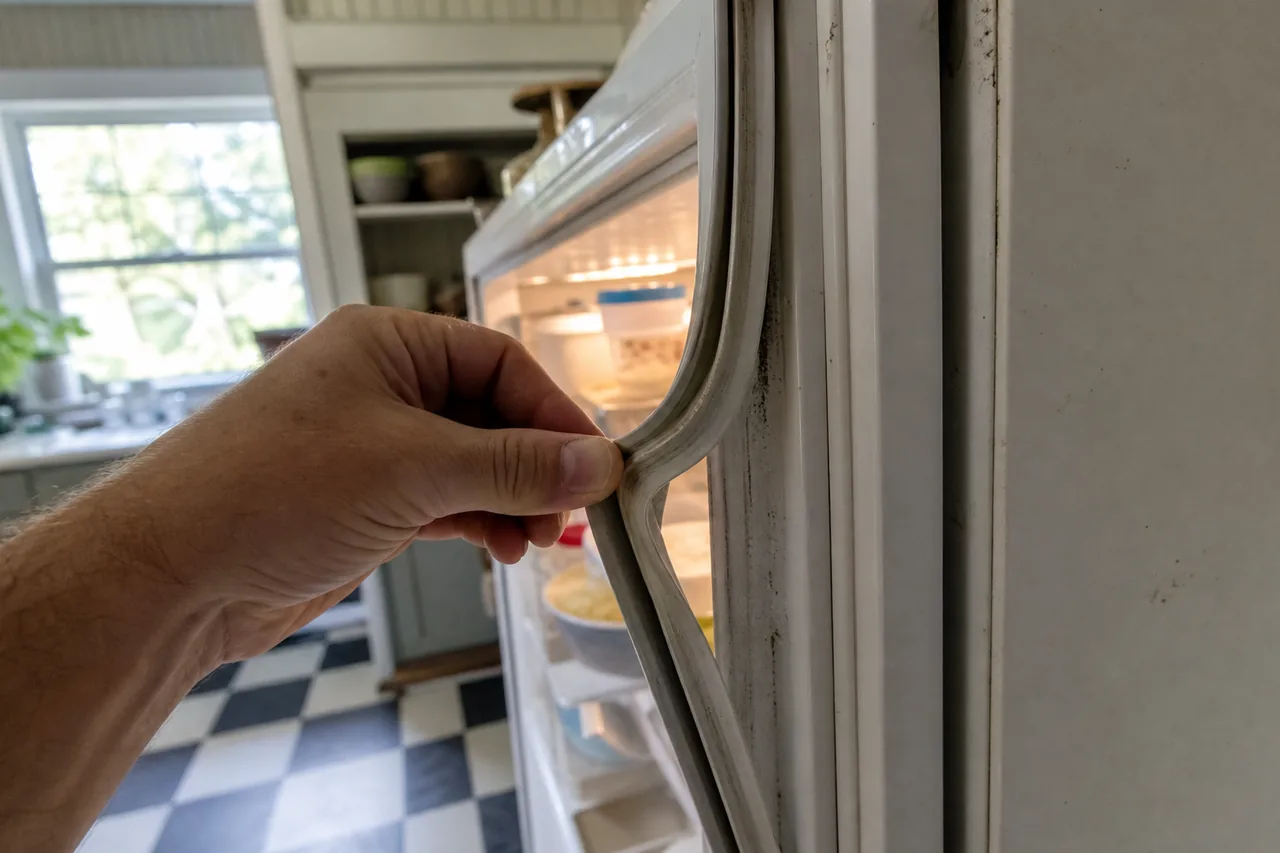
Run your hand around the door seal. It should grip evenly all the way round; a gap lets warm, damp air in and keeps the compressor running.
Then check whether the noise comes with lost cooling. Stand an appliance thermometer in a glass of water on a middle shelf, leave it 5 to 8 hours, and expect 38 to 40 °F. Thermador recommends +39°F (+4°C) for the main compartment of a Freedom column. On a Freedom freezer column, the temperature alarm shows the warmest reading it reached, which tells you whether a noise has already cost cold.
When to book a technician
Call when a scraping fan returns after the frost has melted, when a hum comes with rising temperatures, or when the compressor clicks without starting. Before you book, photograph the rating label inside the refrigerator compartment, on the right side near the door: the E-Nr and FD numbers on it are what a technician needs to match parts. Our checks before you call note lists a few more.
If the compressor or sealed system is at fault, the warranty matters. For built-in Thermador refrigerators, sealed-system coverage includes labor as well as parts during the 3rd through 6th years, then parts alone during the 7th through 12th years. Outside that cover, sealed-system work on a refrigeration column typically falls in a range of $860–$2,480, and the firm figure follows the $80 diagnostic.